Create as a team without losing the brand
Give the whole team the context behind the work
Audience profiles, brand voice, product knowledge and campaign plans stay with the project instead of living in one person's notes.
- A shared starting point — Everyone creates from the same approved brand and audience information.
- Clean client separation — Project access keeps people focused on the accounts they actually work on.
- Invite people by email — Bring employees, freelancers or collaborators into the team and assign their role.

Put a clear decision between a draft and publication
Decide who can create, edit, approve and publish. Work remains reviewable until the right person gives it a yes.
- Roles that match the work — Control access to content, channels, schedules and publishing.
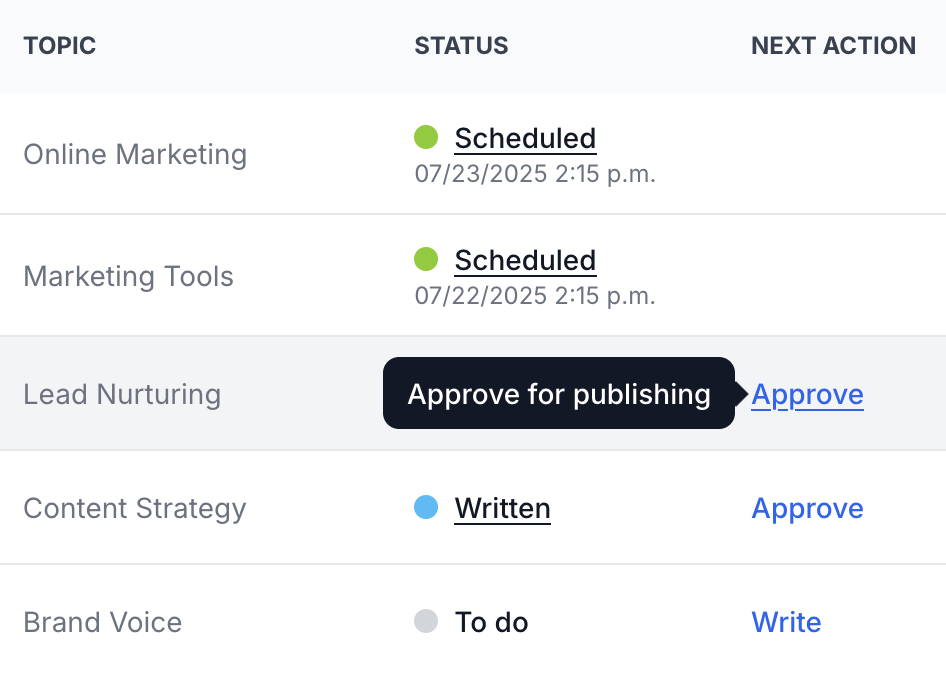
- Approval workflow — Keep drafts away from live channels until they have been checked.
- One visible process — The team can see where work stands without chasing updates through messages.

Give each person access to the clients they actually work with
Invite people into the organisation, then keep their access focused on the relevant projects. Clients and collaborators can participate without seeing unrelated work.
- Invite by email — Bring employees, freelancers and client reviewers into the right workspace.
- Match roles to responsibilities — Separate viewing, creating, editing, approving and publishing.
- Keep clients separate — Access to one project does not expose the rest of the organisation's work.

A clearer route from draft to approved
The team works from the same audience knowledge and brand rules, with control where it matters.
Shared context
- Give everyone the same audience profiles, brand voice and source material.
- Reduce repeated briefings and information trapped with one person.
- Keep client work organised inside dedicated projects.
Roles and access
- Use role-based access across the team.
- Give people access to the work they need without exposing every project.
- Support internal teams, freelancers and agency-client collaboration.
Approval before publishing
- Route content through approval so nothing goes live without a yes.
- Review the platform-ready version before it is scheduled.
- Keep creation, feedback and publishing inside the same workflow.
FAQs
Yes. Organisations can invite team members, share projects and divide responsibility for creating, editing, approving and publishing content.
Yes. Role-based permissions can control access to projects, content, connected channels, schedules and publishing actions.
Content moves through a review and approval process before publication. This lets a designated reviewer check the final platform-ready version before it goes live.
Yes. People can be invited by email and assigned a role suited to the work they need to see or complete.
Everyone in a project can work from the same brand voice, audience profiles, offerings and knowledge base. The shared context reduces variation caused by separate briefs and personal prompt libraries.